Airline operations are a masterclass in extreme logistical complexity. To the average passenger, the “experience” of air travel is defined by the interactions with a check-in agent, a brief wait in a departure lounge, and the service provided by the cabin crew. However, this visible layer represents barely 5% of the total effort required to operate a flight safely, punctually, and efficiently. Every successful takeoff is the culmination of a highly integrated “symphony” of interlocking departments, each working with precise timelines and razor-thin margins. To grasp the intricacy of airline management and organization, one must look beyond the flight deck and cabin to understand the massive support infrastructure operating relentlessly behind the scenes. This article provides an in-depth analysis of the key departments that constitute a modern commercial airline, exploring their specialized functions, regulatory responsibilities, and how they collaborate to deliver a seamless air travel experience.

Key Departments in Airline Operations: Airline Organization and Structure
The Impact of Business Models on Organizational Structure
While the core functional areas (like Flight Operations and Maintenance) exist in every airline, the overall organizational chart is heavily influenced by the airline’s specific business model.
Legacy Carriers vs. Low-Cost Carriers (LCCs)
Legacy, or Full-Service Network Carriers (FSNCs), generally have deeply siloed, hierarchical structures with highly specialized departments. For example, they may have separate dedicated sub-departments for international cargo planning, premium passenger services, and complex alliance management.
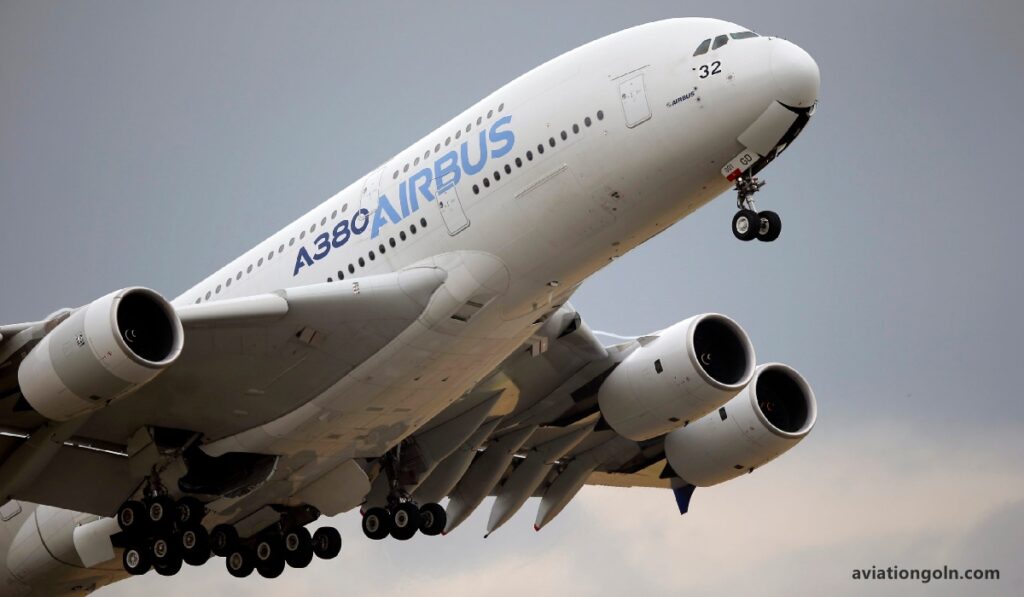
In contrast, Low-Cost Carriers (LCCs) or Ultra Low-Cost Carriers (ULCCs) prioritize extreme operational efficiency. Their organizational structures are significantly flatter. In an LCC, the marketing team might also handle corporate communications, and a “ground operations manager” might oversee Passenger Services, Ramp Services, and Ground Handling combined. LCCs typically use fewer aircraft types (e.g., only Boeing 737s or Airbus A320s), which simplifies their Technical Operations and training requirements compared to a legacy carrier with a diverse fleet of narrow and wide-body aircraft.
Comparative Table: Legacy vs. LCC Organizational Dynamics
| Organizational Aspect | Legacy/Full-Service Carrier | Low-Cost Carrier (LCC) |
| Hierarchy | Deeply Hierarchical, Siloed | Flat Structure, Rapid Decision Making |
| Technical Operations | Specialized by Multiple Aircraft Types (Broad Fleet) | Simplified (Single or Few Aircraft Types) |
| Network Planning | Complex (Hub-and-Spoke, Alliances) | Simplified (Point-to-Point) |
| Ground Services | Dedicated Premium Lounges, Complex Baggage Transfer | Minimal Premium Services, Focus on Rapid Turnaround |
| Commercial | Dynamic Pricing across many Fare Buckets and Classes | Simplified Pricing Models, Focus on Ancillary Revenue |
The Integrated Operations Control Center (IOCC): The Central Nervous System
Before detailing individual departments, it is crucial to understand the one location where they all converge in real-time: the Integrated Operations Control Center (IOCC) or Network Operations Center (NOC).
The IOCC is the central nervous system of any airline. Operating 24/7/365, it is a high-pressure hub where representatives from Flight Operations, Cabin Services, Technical Operations (Maintenance), and Ground Services sit shoulder-to-shoulder. Their collective mission is to monitor the entire network, manage real-time irregularities (such as severe weather, technical faults, or ATC delays), and execute rapid decision-making to maintain schedule integrity. The IOCC illustrates that while departments are specialized, their operational execution must be centralized and immediate.
I. Executive Leadership and Strategic Planning
At the apex of the airline’s organizational structure sits the executive leadership team. Their function extends beyond daily management; they are responsible for setting the long-term vision, mission, and corporate strategy of the carrier.
Chief Executive Officer (CEO): The highest-ranking officer, the CEO defines the airline’s overarching vision and mission. They make critical strategic decisions regarding market positioning, fleet acquisition, and corporate governance.
Chief Financial Officer (CFO): The CFO is the guardian of the airline’s financial health. Their responsibilities include complex financial reporting, fiscal strategy, tax compliance, investor relations, and managing the airline’s massive capital and operational expenses (CAPEX/OPEX). Fuel hedging strategy often falls under this office’s supervision.
Chief Operating Officer (COO): The COO is directly responsible for the operational side of the airline. Their primary objective is ensuring that Flight Operations, Technical Operations, and Ground Services work together with extreme efficiency, maintaining safety and punctuality standards.
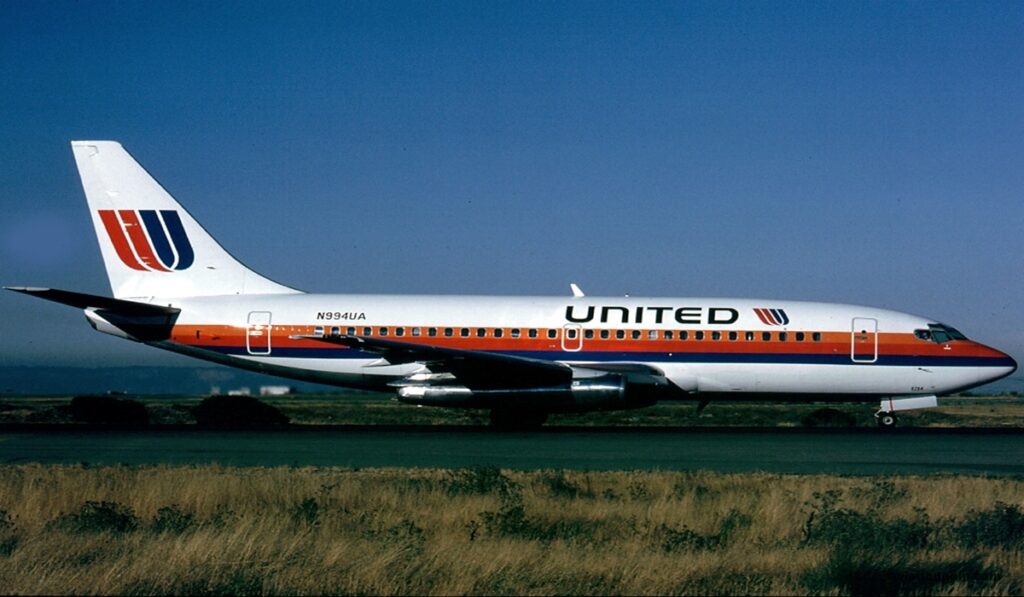
II. Operational Heart: The “Glass Cockpit” and Technical Expertise
This division houses the highly skilled, regulated professionals who operate and maintain the aircraft. Safety is the non-negotiable core value driving every decision here.
A. Flight Operations
Flight Operations is responsible for the actual flying of the aircraft and the management of the personnel who do so. It must operate under the strictest adherence to national Civil Aviation Authority (CAA) regulations (like the FAA in the US or EASA in Europe) and internal airline safety standards.
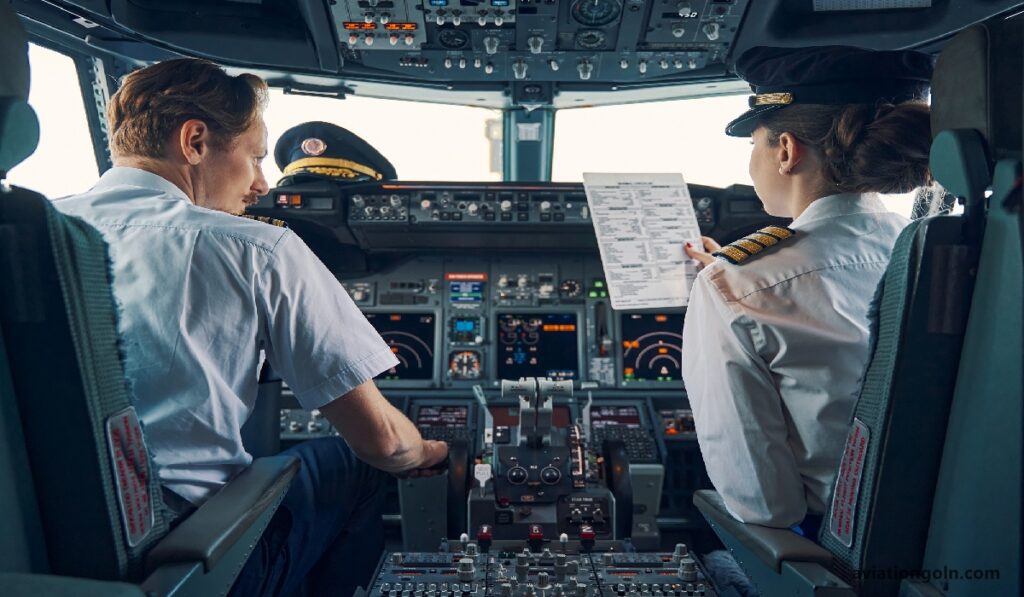
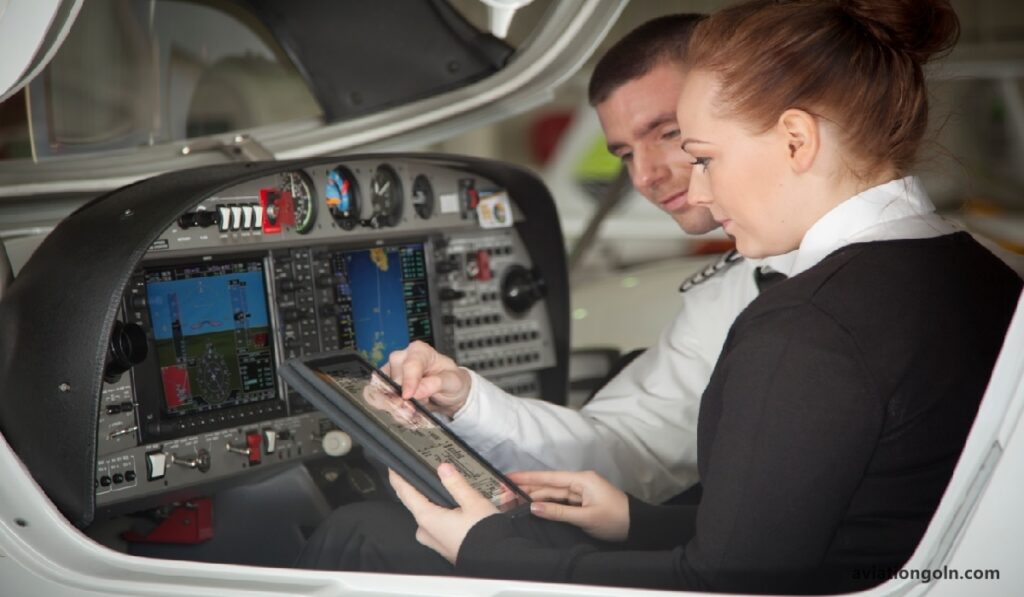
Pilots (Captains and First Officers): They are the most visible operational staff. Beyond the obvious task of flying, Captains (the pilot in command) hold the ultimate legal responsibility for the safety of the aircraft, crew, passengers, and cargo during the flight. First Officers (Co-Pilots) assist the Captain and act as the pilot flying or pilot monitoring (non-flying) on rotating segments.
Flight Dispatchers / Flight Operations Officers (FOOs): They are the “pioneers of the flight,” working behind the scenes. Dispatchers prepare comprehensive flight plans (fuel calculation, routing, weight and balance), assess weather conditions (METARs/TAFMs), monitor ATC constraints, and ensure that every flight complies with all regulatory and safety limitations (such as ETOPS/EDTO requirements). In many regulatory environments, the Dispatcher and the Captain share “joint responsibility” for the safety of the flight.
Important Note: Under most jurisdictions, a Flight Dispatcher holds a certificate and has the operational authority to delay, cancel, or divert a flight if safety is compromised, independent of the pilot’s decision.
Flight Training and Standards: This sub-department ensures that all flight crew (pilots and dispatchers) maintain the highest proficiency and knowledge standards. They manage Type Rating training, recurrent simulator checks, and line proficiency evaluations.
B. Cabin Services
The primary objective of the Cabin Services department is to ensure the safety and comfort of passengers while they are on board. This department often acts as the primary brand differentiator, as cabin crew are the frontline staff providing customer service throughout the journey.
Flight Attendants: While often viewed through the lens of customer service (meal and beverage delivery), their true primary role is safety. They are highly trained for emergency situations, including medical emergencies (first aid), firefighting, emergency evacuations (on land or water/ditching), and managing unruly passengers or security threats.
Cabin Crew Training and Quality Assurance: This team develops and executes the mandatory training curricula that all cabin crew must master. This training is not generic; it must be specific to each aircraft type the attendant is certified to work on.
C. Technical Operations: Maintenance, Repair, and Overhaul (MRO)
Commonly known as Maintenance, this department is solely responsible for ensuring the ongoing airworthiness and safety of the airline’s aircraft. Their organizational structure must comply with rigid regulatory oversight, such as EASA Part-M or FAA Part 145 standards.
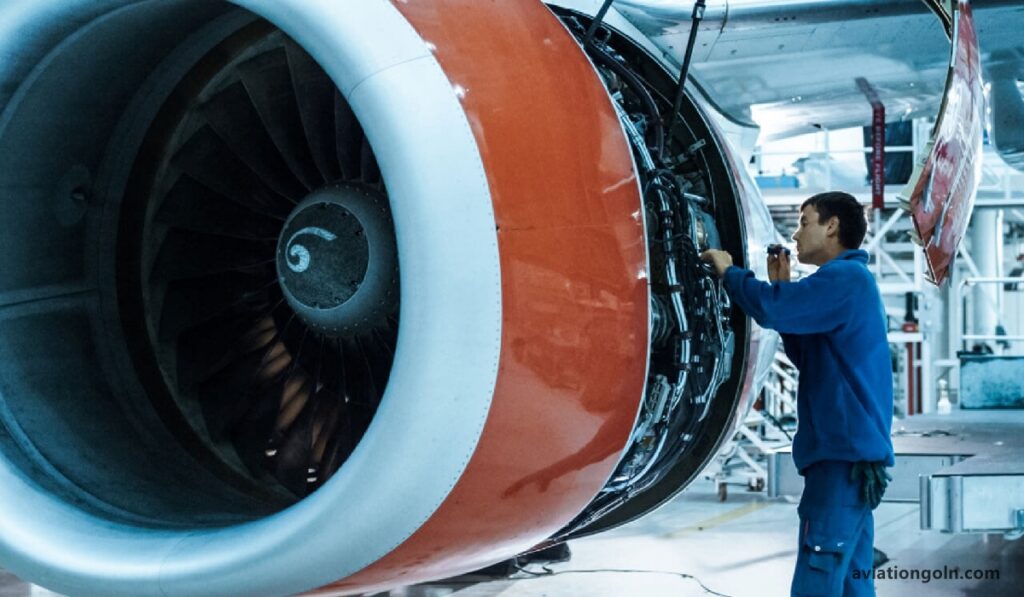
Aircraft Maintenance Technicians (AMTs) / Licensed Engineers: These are the hands-on specialists who perform inspections (from routine daily checks to heavy “C-Checks” or “D-Checks”), perform preventative maintenance, and execute all repairs. They must hold specific licenses and ratings for the aircraft and engine types they work on.
Maintenance Planning: They are the strategists of technical operations, organizing all scheduled maintenance checks (time-controlled or cycle-controlled). Their planning must optimize the balance between ensuring aircraft are available for flights and performing essential safety maintenance to prevent grounding or severe technical delays (IROPS).
Reliability and Engineering: These highly specialized teams design and implement modifications to aircraft systems and components, often in response to Service Bulletins (SBs) from the manufacturer or Airworthiness Directives (ADs) from the regulator.
Warning: A single missed or incorrectly performed maintenance check can result in immediate grounding of the aircraft by the regulator, severe financial penalties, and, most importantly, a critical compromise of safety.
III. The Ground and Terminal Interface: Where Time is Money
ground services must operate like a finely tuned machine; a slow turnaround on the ground almost always equals a delay in the air, directly impacting the airline’s bottom line.
A. Ground Services: Ramp and Terminal Operations
Ramp Operations (everything that happens around the aircraft on the ground) is a high-risk environment requiring precise coordination.
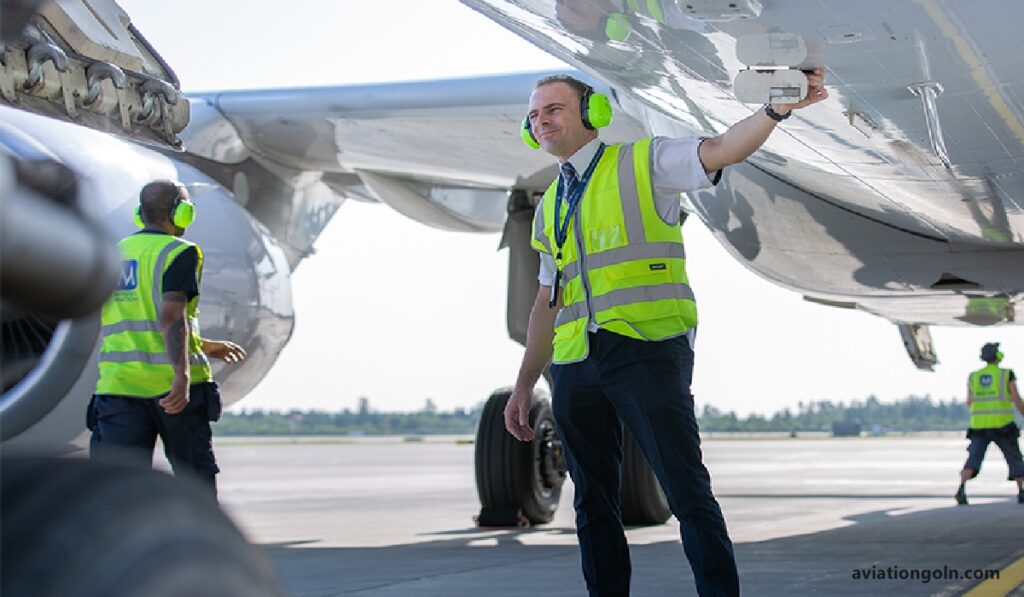
Ramp Handling (Below Wing): This includes baggage handlers, cargo loaders, and ground crews responsible for the aircraft “turnaround.” They are also responsible for aircraft marshalling (guiding the aircraft to the gate), pushback (towing the aircraft from the gate), and sometimes anti-icing/de-icing operations. HAZMAT (hazardous materials) training is critical here.
Ramp Services: They ensure that the aircraft is refueled, sanitized/cleaned, and restocked (catering) quickly and safely for its next flight.
Terminal Operations manages the passenger journey before and after the flight.
Passenger Services (Above Wing): They are frontline customer service staff, managing check-in counters (baggage drop), gate assignments, boarding procedures, and, crucially, irregular operations (IROPS), such as managing passengers during massive delays or cancellations.

IV. The Revenue Engine: Commercial Strategy and Profitability
This division is purely data-driven, focusing on the airline’s financial viability, market share, and network connectivity.
A. Network Planning and Fleet Strategy
Network Planning determines where the airline flies, how often, and with what aircraft to maximize profitability. This is a complex, data-heavy discipline that must align the airline’s schedule with aircraft availability and maintenance constraints. Fleet Strategy works closely with Network Planning to decide which aircraft types are needed for the proposed network, managing the Multi-Billion Dollar decisions of aircraft purchase or leasing (CFO and CFO office are heavily involved).
B. Revenue Management and Pricing
Revenue Management is the data science of maximizing an airline’s yield (revenue per passenger-mile). This department determines the pricing strategy for every seat on every flight, balancing ticket price against demand.
Five Keyfare Bucketing Concepts (Revenue Management Principles)
Demand Forecasting: Predicting how many passengers will want to fly on a given route at a given time.
Fare Buckets (Classes of Service): Segregating seats into different “buckets,” each with different prices and restrictions (e.g., non-refundable vs. flexible). A single economy cabin might have 10+ fare buckets (Y, B, M, S, L, etc.).
Inventory Control: Deciding how many seats to release in each fare bucket. This is dynamic and changes based on real-time booking trends.
Load Factor Optimization: Balancing the price (yield) to ensure the plane is as full as possible (high load factor) without sacrificing revenue by selling too many seats too cheaply (revenue management).
Overbooking Strategy: The calculated risk of selling more tickets than available seats, based on historical no-show rates, to minimize spoilage.
Misconception: Pricing is rarely “fixed.” An MFD (Multi-Function Display) seat is priced dynamically; what you pay today might be different from what your neighbor paid yesterday for the exact same flight.
C. Cargo Operations
For many airlines, transporting cargo is not just an accessory; it is a major, highly specialized, and often decisive source of revenue.
Cargo Sales and Handling: This team promotes the airline’s cargo capacity, manages relationships with global freight forwarders, and ensures that goods (from pharmaceuticals to live animals) are loaded and unloaded efficiently and safely.
Cargo Planning: Manages the logistics of cargo transport, including complex documentation, customs compliance (WCO standards), and maximizing the use of the “belly capacity” of passenger aircraft.
Important Note: The safe transport of Dangerous Goods (DG) by air is governed by rigid international standards (IATA DGR). Cargo Operations must have certified specialists to handle DG acceptance, labeling, and loading constraints (e.g., separating incompatible goods).

V. Essential Support and Infrastructure
These departments are invisible to the passenger but are the structural backbone of any commercial enterprise.
Human Resources (HR): Managing a massive and highly varied workforce (pilots, engineers, mechanics, customer service, IT) requires specialized HR. They oversee recruitment, regulatory required training, employee relations, welfare, and benefits. HR must also coordinate specialized training like Crew Resource Management (CRM).
Safety, Quality, and Regulatory Compliance: This is the ultimate “safety net” of the airline. This department monitors and analyzes all operations for potential safety hazards (Safety Management System – SMS), conducts internal audits to ensure adherence to safety standards (like the IATA Operational Safety Audit – IOSA), and prepares responses to emergencies (Emergency Response Plan – ERP). Quality Assurance performs audits and inspections to ensure adherence to all quality and safety standards.
Finance, Procurement, and Legal: Beyond the CFO’s office, Finance manages accounting and fiscal responsibility. Procurement is a massive function, acquiring everything from Million-Dollar aircraft components to in-flight snacks and staff uniforms. The Legal department manages regulatory compliance (air traffic rights, noise regulations, international law), contract management, and any legal disputes.
B. Information Technology (IT) and Communications
Technology is the indispensable backbone of modern airline operations.
Reservation Systems (GDS/CRS): They manage the critical booking and ticketing platforms (Global Distribution Systems).
Cybersecurity: This sub-department has become indispensable, protecting sensitive passenger data, financial records, and ensuring the resilience of the airline’s digital infrastructure against cyber threats that could ground the airline.
Communication Systems: Ensuring effective and secure internal (ACARS/ATC communication) and external communication (passenger relations, airport authority).
Interdepartmental Collaboration: The Symphony in Action
The mentioned departments are highly specialized and often siloed, yet they must function in constant harmony. Consider the typical Aircraft Turnaround Process:
Ground Services (Passenger Services): Manages check-in and boarding gates (passenger journey).
Ground Services (Ramp Handling/Ground Handling): Loads/unloads baggage and cargo (weight and balance critical). Marshalling, pushback.
Technical Operations (Maintenance): Completes required ground maintenance checks and addresses any technical snags.
Flight Operations (Dispatch): Re-calculates and finalizes the final weight and balance, updates fuel planning.
Flight Operations (Pilots): Completes pre-flight checks, verifies final loadsheet, and assumes legal command.
Cabin Services: Completes cabin safety checks, manages boarding and passenger comfort, and prepares for departure.
A delay or error in any of these departments automatically cascades through the system. This symphony of collaboration illustrates that the organization and structure of an airline must be agile, integrated, and above all, driven by a unified culture of safety.
Frequently Asked Questions (FAQ)
1. What is the most critical department in an airline?
While every department is necessary for the final product (the flight), Flight Operations (Pilots and Dispatch) and Technical Operations (Maintenance) have the most critical function, as they have direct, daily responsibility for the safety of the aircraft, crew, and passengers.
2. Which airline department has the largest impact on customer perception?
Cabin Services (specifically Flight Attendants) has the single largest impact on customer perception and brand loyalty, as they have the longest and most personal interactions with passengers throughout the customer journey.
3. What is the Integrated Operations Control Center (IOCC)?
The IOCC is the 24/7 central hub where all operational departments converge to manage daily flight operations, network integrity, and irregular operations (IROPS) (like massive delays or diversions).
4. How does a legacy airline’s structure differ from a Low-Cost Carrier’s (LCC)?
Legacy airlines typically have a deeply siloed, hierarchical structure with deep specialization for their diverse fleets and complex networks. LCCs have much flatter organizational structures, with teams that are often broader and multi-tasking.
5. Do all airline departments have safety responsibilities?
Yes, every single department, including non-operational ones like Commercial and HR, has a role in the airline’s Safety Management System (SMS). This is known as a “just culture,” where every employee is empowered to identify and report safety hazards.
Key Takeaways
| Area of Analysis | Core Points at a Glance |
| Operational Heart | Flight Operations and Technical Operations (MRO) have direct safety responsibility and strictly follow regulatory standards. |
| IOCC (NOC) | This center is the 24/7 central nervous system, where all operational departments collaborate in real-time to manage the network. |
| Business Model | Legacy airlines have complex, siloed structures; LCCs have flatter, more efficient organizations. |
| Customer Interface | Ground Services and Cabin Services are frontlines for customer experience, though Cabin Crew’s primary role is safety. |
| Commercial Strategy | Network Planning and Revenue Management use data science to maximize yield and optimize flight schedules. |
| Cargo Operations | For many carriers, Cargo is a specialized, significant revenue stream, not just an accessory. |
| Safety and Quality | This department is the ultimate “safety net,” performing audits (IOSA) and preparing Emergency Response Plans (ERP). |